
- Canonical prescriptions on sodomy in the Early Church
- Differentiation of same-sex relationships in church canons
- Petting (sexual caresses without penetration of the anus)
- Pornography
- Oral sex and cunnilingus with a mistress
- Russian church legislation
- French kiss
- Anal sex
- Woman on top
- Mutual masturbation and petting
- Lesbian relationships
- The intensification of the demonisation of masturbation and forms of male sexuality in the 19th century
- Let’s sum up
- P.S.
The development of church legislation regarding same-sex relationships and masturbation is a path from brief biblical prohibitions to a detailed system of Byzantine canons and subsequent integration into state law.
Canonical prescriptions on sodomy in the Early Church
In the 4th–9th centuries, the Church developed specific penance periods (epitimia), which are still considered the norm in Orthodoxy.
St. Gregory of Nyssa states that sexual relations are lawful only within marriage (4th canon). In his opinion, adultery is more sinful than fornication, since in this case there is a victim (the offended party) — the spouse.
Accordingly, he considers bestiality and sodomy to be even more serious crimes, since
‘these sins are adultery against nature. For they cause harm to a foreign species, and moreover, contrary to nature.’
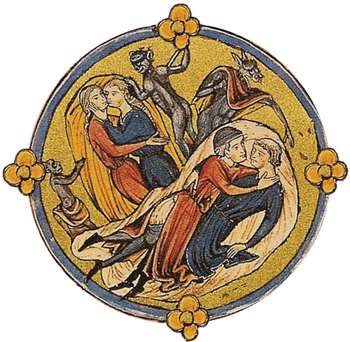
In the case of a husband’s infidelity to his wife, the saint takes into account the pain caused to her (torment from jealousy and feelings of betrayal), but in relation to sex with men or animals, he moves on to the concept of abstract harm to another species, and also takes into account the category of ‘nature’ from the works of ancient philosophers. Let us note an important idea of Heraclitus, which was adopted by Judeo-Christianity through ancient philosophical systems: ethics is imprinted in nature (the cosmos) itself, which serves as a paradigm for human relations. Heraclitus believed that the Greek state, laws, religion, art, and even language should be reformed to bring them into line with divine law and nature (κατὰ φύσιν). As if personifying nature, the Apostle Paul writes to the Corinthians about women covering their heads during prayer:
‘Does not nature itself (φύσις) teach you?’ (1 Corinthians 11:14).
This implies the natural law of nature, which the Creator has instilled in human nature.
St. Gregory perceives this as aggravating circumstances and proposes to assign such sinners ‘a special time of repentance,’
‘since the sin becomes aggravated: one consists in unpraiseworthy lust, and the other in offence to another.’
As a result, the penance for fornication is nine years, and for adultery, bestiality, and sodomy, this time is doubled. It is interesting that in this church rule, sex with another man’s wife is placed on the same level as sodomy, although many ordinary people think that sodomites are more repulsive sinners than adulterers.
St. Basil the Great proposed that sodomites and adulterers be excommunicated from communion for 15 years (62nd rule). He emphasised that
‘sodomites… and adulterers are worthy of the same condemnation’ (7th rule).
John the Faster introduced the principle of ‘economy’ (mitigation), reducing the enormous terms of Basil the Great if the sinner showed active zeal in prayer. It was his rules that formed the basis of the Nomocanons, collections of church laws. The rules of St. John IV the Faster († 595) allow for the mitigation of penance to three years, provided that the sinner sincerely repents:
«He who commits shameful intercourse with a man shall be deprived, according to rule of Gregory of Nyssa, of Holy Communion for eighteen years, and according to Basil the Great, for fifteen years. We prescribe that such a person be deprived of communion for three years, on condition that he prays and fasts with contrition» (Rule 29).
Now consider the church rule on anal sex with a woman:
‘He who copulates with his wife in an unnatural manner shall be subjected to eight years of penance’ (Rule 65).
The bishops’ lack of understanding of the causes of ‘special desires’ can be seen in the rule on bestiality:
«If anyone commits “indecency” with animals many times, having a wife, he shall be subjected to eight years of penance; if he does not have a wife and commits the aforementioned “indecency” once or twice, or at most three times, he shall be subjected to three years of penance. The wife shall be subject to the same punishment for the same crime» (Rule 59).
Apparently, the author of this rule imagined sexual desire to be like scabies, which can easily be satisfied with a woman.
Incidentally, for those who practise witchcraft, John the Faster reduced the period of repentance to three years. He subjects women who adorn themselves with talismans to the same punishment.
| Author | Sin | Punishment (penance) |
| Basil the Great (†379 AD) | male sodomy | 15 years of excommunication |
| Gregory of Nyssa (†394 AD) | male sodomy | 18 years of excommunication |
| John the Faster (†595) | male sodomy | 3 years of excommunication |
| John the Faster (†595) | sodomy with a woman | 8 years of excommunication |
| John the Faster (†595) | sodomy with animals | 3-8 years of excommunication |
| John the Faster (†595) | malakia (masturbation) | 40 days of dry eating |
| John the Faster (†595) | double malakia (mutual masturbation) | 80 days of repentance |
| John the Faster (†595) | witchcraft and talisman use | 3 years of excommunication |
Differentiation of same-sex relationships in church canons
Masturbation in the Eastern Church was called ‘self-pollution’ and “malakia” and was condemned as ‘defilement.’ It was believed to prevent communion up to 40 days.
Greek authors began to refer to masturbation as ‘malakia’ (not to be confused with the concept of μαλακοὶ from 1 Cor 6:9, where St. Paul most likely meant passive sodomites).
‘Whoever commits malakia (masturbation) shall be subjected to forty days of penance, which must be carried out in dry fasting, performing one hundred prostrations daily’ (Rule 10 of St. John the Faster, who was Patriarch of Constantinople from 582 to 595).
Rule 12 states that masturbation does not prevent one from being ordained, but after ordination, ‘self-pollution’ is punishable by temporary suspension from ministry and even expulsion from the priesthood.
The ecclesiastical legislation of the Eastern Church considers mutual masturbation between two men to be sexual frolic:
‘When two men mutually commit malakia, they are punished as for double malakia with eighty days of penance’ (Rule 11).
In the Nomocanon appended to the Great Euchologion, the beginning of this rule is expressed as follows:
‘Those who mix with each other, as if committing double malakia.’
Such an act was perceived as slightly more serious than ‘self-pollution’.
This is a perfect illustration of the fact that in the Ancient Church there was no concept of male sexuality that would combine all forms of sexual interaction between men.
Once again: penance for anal sex between men was 15-18 years, and for mutual masturbation — 2 months of repentance.
Petting (sexual caresses without penetration of the anus)
No less surprising is the church rule on the admissibility of ordaining a young man who was raped as a child:
«Anyone who, while still a child, was defiled by someone else cannot enter the priesthood, for although, as a minor, he did not sin, his body is defiled and has become unfit for priestly service. If, however, as a child, he was defiled in his loins, then, after penance, he may not be forbidden to enter the priesthood» (Rule 30).
Here, St. John the Faster distinguishes between the passive role in anal sex (which is an obstacle to the priesthood) and ‘impurity in the thighs’ as something fundamentally permissible. The latter differs from anal sex in that the penis only moves between the buttocks without penetrating the anal opening.
This was a fundamental Rubicon for church legislation. The church perceived anal sex as a grave crime, while all other forms of sexual interaction between men were considered permissible pleasures: kissing, hugging, sleeping together, petting, and mutual masturbation.
Pornography
Under threat of excommunication from the Church, the 100th rule of the Council of Trullo in 691–692 prohibits the production of ‘images that corrupt the mind and cause the inflammation of impure pleasures.’
Oral sex and cunnilingus with a mistress
One of the canonical rules of St. Basil the Great considers a situation where a deacon defiled his mouth with a woman. The Byzantine canonist Patriarch Valsamon (1193-1199) in his interpretation of this rule compared cunnilingus to ordinary sexual intercourse between a man and a woman, and in his opinion, sexual intercourse requires the maximum punishment, because it is a ‘greater sin’ or ‘complete sin.’
Russian church legislation
The work of canon law ‘“Kirik’s Inquiry to Archbishop Niphont”’ (12th century) shows how the clergy (Nifont was canonised as a saint) viewed children’s sexual games:
«I asked about this too: if a girl climbs on top of another girl, it is easier to punish them than if it were with a man.
I asked him, what if children climb on top of each other without understanding?In this case, he said, there is no sin for boys under the age of 10, but don’t ask about girls, they can spoil themselves even earlier — that’s the kind of teenagers we have«.
French kiss
In Muscovy, it was believed that
‘it is a sin to kiss, sticking your tongue into the mouth of your wife or friend. Penance is 12 days, 60 bows a day’ (From ‘The Rules of the Saints (Father) on Penance’).
Anal sex
The only permitted method of intercourse was the so-called missionary position, while all others were attributed to the influence of the devil.
The punishment for anal sex with a man in Ancient Rus ranged from 8 years of penance in the 13th century to 3 years in the 15th-16th centuries.
Of course, condemnation and reproach for this vice was expressed, but it was not comparable to the attitude towards the sin of Sodom in the West, where, by the 13th century, male sodomy was punishable by death.
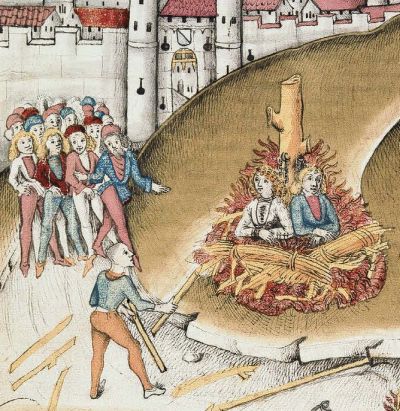
The more tolerant attitude of Muscovites towards sodomy was noted with surprise by many foreign travellers, including Sigismund Herberstein.
‘Unnecessary fornication through the rear passage’ was unequivocally condemned in heterosexual relations.
«There is another sin of Sodom, if one lies with one’s wife and commits fornication in the anus (back passage), this is unnatural, this is a great lawlessness, and an insatiable sin, and blasphemous. We conclude our answer on this matter, and it will be more comforting to remember Sodom and Gomorrah on the Day of Judgment‘ (list of sins from the 14th century ’Rules for Believers in Serpents»).
The sin of Sodom with one’s own wife was considered an obstacle to ordination as a priest. The period of repentance varied from 40 days to 3 years. Sometimes the penance was unexpectedly lenient:
‘Have you committed fornication in the rear passage or from behind with your husband? — 100 prostrations.’
Woman on top
The ‘cowgirl’ position was classified as a sin of Sodom:
‘she committed all kinds of Sodomite fornication, climbing on top of them.’
This was punished with prolonged (from 3 to 10 years) repentance, accompanied by numerous daily prostrations. In this case, the very basis of the family order — male domination — was subject to review.
Mutual masturbation and petting
Church rules show how mutual masturbation was distinguished from petting in Muscovy:
«There are two types of fornication: some do it with their hands, others with their hips. Fornication with the hands is worse than with the hips. There is also female malakia, when wives do it to each other.‘
From the ’Rule of the Saints (Father) on Penance‘: ’It is a sin to poke one’s own womb, whether for a husband or a wife. Penance is 12 days, 60 bows a day.»
The penance was insignificant:
‘Those who mix with each other, committing double malakia, shall fast for eighty days’ (Rule 59 of the Nomocanon).
From ‘Questions and Confessions’ (14th century), it is clear that if
‘(sexual) play with a godfather or neighbour leading to ejaculation — 40 days of dry eating’.
Lesbian relationships
Lesbianism had no specific name in Ancient Rus’ and Muscovy, and it was generally considered objectionable only when it involved masturbation. Affectionate gestures and kisses between girls, however, were typically a normal part of many folk games. Consequently, some church authorities, even when participants lost their virginity through these games, imposed only very mild penalties.
“Or have you lain upon your female companion? — Observe a fast of five weeks.”
Forty days of penance can hardly be called a serious punishment — priests prescribed roughly the same penance for singing secular songs and dancing.
The intensification of the demonisation of masturbation and forms of male sexuality in the 19th century
The term ‘masturbation’ originated in the 18th century, based on the text of Genesis 38:8–10. The word was introduced into common usage in 1716 in an anonymous pamphlet entitled Onania, distributed in London, which described the terrible sin of ‘self-pollution’ as leading to impotence, gonorrhoea, epilepsy and the squandering of abilities, as well as in the 1760 work L’Onanisme by the Lausanne physician Tissot.
In the 19th century, ideas about the harmfulness of masturbation became widely accepted in both medicine and society as a whole.
Bishops followed pseudo-medical taboos. For example, Bishop Theophan the Recluse gave a similar list of the consequences of masturbation. He believed that the sin of onanism was a mortal sin and ‘deprived one of the Kingdom,’ that fornication
‘dries up and causes premature death. In others, it relaxes the mind, suppresses sanity and energy, and can cause insanity. Guard yourselves!’
Bishop Nicodemus (Milas), a Serbian canonist (+1915), demonised the sin of masturbation, which was a characteristic feature of the theology of that time:
«Masturbation was condemned even in the Old Testament, when God punished the son of the patriarch Judah, Avnan (Onan), who spilled his seed on the ground (Genesis 38:8-10), which is why this unnatural and vile impurity is also called onanism. We consider the punishment for malakia prescribed by this (10th) rule to be too lenient, for this sin offends the commandment of God Himself.»
He believed that St. John the Faster was mistaken in prescribing a ‘weak punishment’ for mutual masturbation:
«We consider the present rule of John the Faster in connection with his 29th rule on sodomy. In this rule, John the Faster prescribes a minor punishment for the guilty parties in comparison with the severity of the crime. Basil the Great prescribes fifteen years of penance for this crime, and Gregory of Nyssa prescribes eighteen years. It seems that the prescriptions of the latter holy father should apply to church practice.»
According to Nicodemus (Milash), mutual masturbation should be punished as a sin of sodomy. Compare: instead of two months of penance, sinners should be excommunicated from communion for 3-15 years.
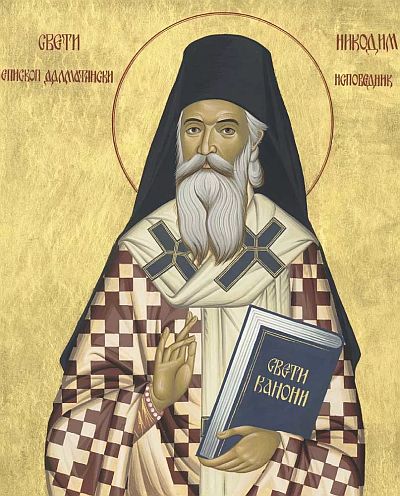
This impressionable bishop was not afraid to attribute his feelings of disgust to God Himself, after which he demanded that ordinary people be punished.
He was considered a ‘fanatical Orthodox Christian,’ but in 2012, Bishop Nikodim (Milas) was canonised, and his ‘Rules of the Orthodox Church with Interpretations’ are an essential resource for studying canon law in Russian theological schools.
Let’s sum up
The analysis shows that in the ancient world, society (family, tribe) determined a great deal in a person’s life. Control over the smallest manifestations of sexuality is an important characteristic of the Church’s activity not only in the Middle Ages, but also at present. Supporters of patriarchy and church traditions in the sexual sphere ignore the diversity and complexity of the moral teachings of the Ancient Church, as well as the personal characteristics and needs of ordinary people.
In the 20th and 21st centuries, everything changed: a person who experiences sexual attraction only to members of their own sex began to be called homosexual. Now, almost any manifestation of love and affection between persons of the same sex has come to be perceived as an attribute of homosexuality.
When encountering any manifestation of emotional affection (kissing, hugging, etc.), many people unhesitatingly identify what is happening with ‘the sin of Sodom’; all of which focus on the concept of homosexuality, although in ancient times, masturbating men were specifically denounced for this offence, without being called sodomites, because these are different forms of sexual behaviour.
In modern Russia, mutual masturbation is perceived as an attribute of homosexuality. But this has nothing to do with the biblical context and church law.
Contemporary homosexuality includes a wide variety of forms of self-expression and interaction between persons of the same sex:
— the desire to grow long hair;
— emotional attachment to a non-relative and brotherhood (partnership) (I Samuels 18:1, II Samuels 1:26);
— public hugging;
— kissing on the lips;
— touching the genitals of persons of the same sex (Genesis 24:2, 9; 47:29);
— contemplating the naked body;
— relaxing and sleeping together;
— mutual masturbation;
— oral sex;
— petting (sex without penetration of the anus);
— anal sex.
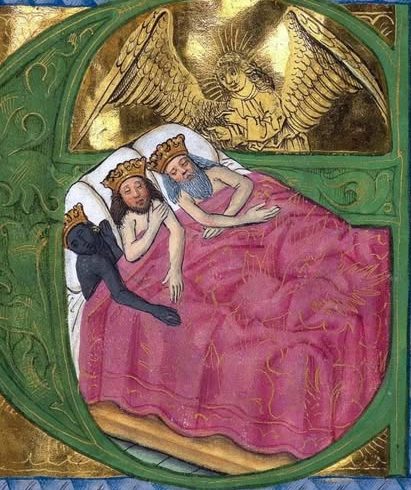
Currently, any of the listed forms of interaction between men can be perceived as a manifestation of homosexuality.
However, in the biblical, Byzantine, Old Russian, and even Soviet traditions, all of the listed manifestations of human feelings (excluding anal sex) were considered either 1) normative, or 2) something reprehensible, but at the level of frivolity, or 3) a form of religious ritual. Only certain forms were prohibited and called 4) sin.
There is a stereotype that same-sex relationships are strictly prohibited in the Bible. But in fact, only anal sex is taboo in biblical texts.
If gay people hug, kiss and sleep in the same bed, biblical and church prohibitions have nothing to do with such interaction.
Calling gay people sodomites is as wrong as claiming, following the apostle, that all Cretans are liars (Titus 1:12).
P.S.
Sexual orientation is a concept in sexology and psychology that originated in Europe in the 19th century. The terms ‘heterosexual’ and ‘homosexual’ were coined in 1868 by Hungarian journalist Karl Maria Kertbeny to describe sexual experience. Accordingly, in the biblical and ecclesiastical paradigm prior to 1868, there were neither heterosexuals nor homosexuals, since people did not previously define each other by the type of sexual relations they engaged in.
In general, orientation was not conceptualised at all, was not subject to reflection, and therefore was not subject to moral condemnation.
It was believed that a man was capable of entering into a sexual relationship with another man due to moral depravity or intoxication, because, according to the apostle, drunkenness leads to debauchery (Eph 5:18).