On the motivation of early ascetics to renounce their families

In the first century CE, we see Jesus, John the Baptist, and the Apostle Paul, who did not marry in anticipation of the imminent Eschaton. Some of Jesus’ disciples, at his call, left their wives and children (Matthew 19:29).
In the 2nd century, Gnostic ideas spread widely alongside early Christian orthodoxy. Gnostic literature of the 2nd and 3rd centuries exceeded the volume of church writings of that time. Some elements of Gnostic teachings and Manichaeism also influenced the supporters of early orthodoxy. Therefore, we see Gnostic nuances in Hermas’ Shepherd, in Syrian ascetic circles associated with Tatian, as well as in the early Syrian encratic tradition.
The original view of the Gnostics and Manicheans on the material world and the «flesh» was accepted by the supporters of strict asceticism and influenced the atmosphere from which monasticism arose in the second half of the 3rd century. Many ascetic enkrite (κρατεῖν — «to abstain») of this period fled the world and sought to achieve maximum freedom from their bodily desires by abstaining from sex, food, sleep, etc. The negative attitude towards flesh and matter inherent in Gnostics and Manicheans could well have motivated many of them to «kill the flesh» and renounce marriage.
The teachings of Marcion, popular at the time, had a number of features in common with Gnosticism.
His «followers considered nature to be evil because it originated from the unjust Demiurge. For this reason, not wanting to fill the cosmos created by the Demiurge, they abstained from marriage and childbearing so as not to produce more of their own kind, born as food for death» (Clement of Alexandria).
For the same reason, some Gnostic communities practised abstinence from sexual activity leading to the birth of children (but not from sex in general!). The ritual consumption of their own semen by men (the Eucharistic rituals of the Fibionites) suggests that some Gnostics practised sex that excluded fertilisation in order to «destroy the labour of women» (Gospel of the Egyptians), making conception and childbirth impossible.
We should also note Clement of Alexandria’s interesting observation about the reason for the rejection of marriage among Gnostics. The followers of the Gnostic Basilides regarded Christ’s words about eunuchs (Matthew 19:12) as a reference to the natural characteristics of men:
«Some are by nature similar to women and follow their habits. It is better for such people not to marry. They are eunuchs from birth» (Clement of Alexandria, Stromata).
In the 3rd and 4th centuries, Manichaeism emerged, retaining many features of Gnosticism and developing into a «world religion.» Many heresies, such as Catharism and Bogomilism, borrowed elements of Manichaean thought.
The ascetics of the 4th century, in addition to Gnostic and Manichaean ideas, were influenced by one of the most radical ascetic thinkers of early Christianity, Eustathius of Sebaste. An analysis of the canons of the Council of Gangra (c. 340) shows that anti-family tendencies were not characteristic of individual communities of Eustathius, but were inherent in monasticism as a phenomenon.
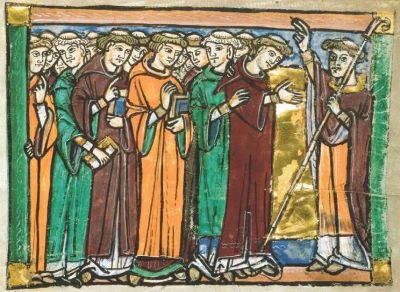
The canons of the Council state that Eustathius’ followers were convinced that complete sexual abstinence was the norm for all Christians and that marriage was evil (10th rule of the Council of Gangra). Therefore, a woman must leave her husband, because marriage is an abomination (14th rule). We should add that female followers of this movement had to deny their gender by wearing men’s clothing (13th rule) or cutting their hair as men do (17th rule).
Apparently, the Council of Gangra was the first attempt to subordinate a new form of Christian life — monasticism, which underwent rapid and chaotic development in Asia Minor in the middle of the 4th century — to the church hierarchy.
Thus, we can assume that among the monastic ascetics of the third to fourth centuries CE there were supporters of sometimes opposing views on sex:
— asceticism as preparation for the end of time: «the time is short. From now on those who have wives should live as if they do not» (1 Cor. 7:29);
— a tendency towards a contemplative life («they had long been fond of the life of a philosopher» Euseb. Hist. eccl. VI 9-10);
— psychological factors (the personal enthusiasm of individual ascetics, the power of their example and authority);
— the Gnostic idea that some men are by nature incapable of sex with women and should not marry;
— Gnostic opposition to marriage and childbearing. Such Gnostics could engage in same-sex acts, which exclude the conception of children;
— Eustathius’ ascetic maximalism (a principled rejection of sex).
It is not surprising that, contrary to their monastic vows, the first monks occasionally experienced same-sex attraction, which was understood as temptation to be resisted. For obvious reasons, ascetic literature mentions monks’ attraction to women much more often than to men and «young boys.» Here is a characteristic example from the 9th century:
«No one should acquire a female slave or livestock, as this is not in accordance with our way of life and is dangerous for our souls… If a monk kisses a woman, he must remain without Communion for forty days; even on the very day of the Lord’s Resurrection, he must not kiss his own mother» (St. Theodore the Studite).
“Love for boys” in monastic circles
The early layer of the “Ancient Paterikon” (“Sayings of the Fathers”) dates back to the late 3rd – early 4th century. This work regularly mentions:
— prohibitions on monks staying together in a cell;
— warnings not to socialise with young and handsome boys unnecessarily;
— advice to avoid physical contact under the guise of care;
— instructions that an elder should not be «too soft» with a young novice.
This suggests that the problem of same-sex relations was recognised but discussed in a veiled manner in the form of prevention.
A typical example is the discussion of an adult monk’s sexual attachment to a young man, as well as the prohibition against sleeping together in the same bed or contemplating one’s naked body:
«Abba John Kolov said: he who delights in and speaks with a young man has already committed fornication with him in his thoughts.
The elder said: do not sleep in the same bed with young men, neither with your brother nor with your abbot, and do this out of fear, not contempt; don’t look at your body when you’re getting dressed» (Ancient Paterikon. Chapter 5).
«Abba Macarius… spoke to the brethren about the desolation of the Skete: when you see a cell built near a swamp, know that the Skete is close to desolation. When you see the lads, grab your coats and leave» (Ancient Paterikon 18.17);
“Abba Isaac of Thebes said to the brethren: do not bring children here; for because of children, five churches in the Skete have been deserted” (Ancient Paterikon 10.42).
The last two statements are difficult to interpret unambiguously.
Did the monks see children and therefore leave to start their own families? Or did they feel sexually attracted to these young children?
The test does not give us a clear answer.
In this context, it is appropriate to mention the apothegms (sayings) of the Fathers:
«More than women, young boys are the devil’s trap for monks. Where there is wine and young boys, Satan is not needed… It is not God who brings young boys to the desert, but Satan.»
Why young men are more dangerous to monks than women is a topic for thoughtful reflection. I believe that this refers to the risk of same-sex relations between elders and young men in a desert monastic environment, where physical intimacy with women is impossible.
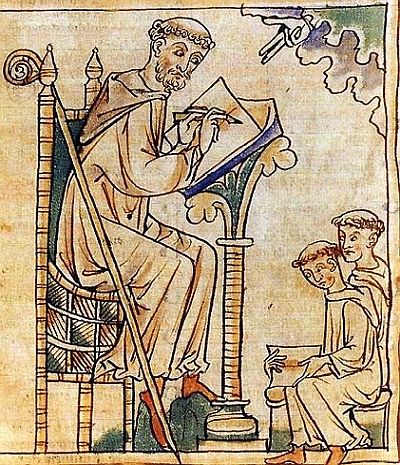
In the second half of the 4th century, the «Instructions of Abba Isaiah to New Monks» appeared in Egyptian monastic circles. Abba Isaiah’s advice correlates with the sayings of the «Ancient Paterikon»:
«Do not enter into fellowship with a youth, do not sleep in the same bed with a young man. Do not sleep with another under the same blanket.»
«If you come to the brethren and one of them says to you, ‘I find no peace here, but I want to live with you,’ do not give him a place, lest you cause others to stumble. Do not allow him to live with you.
Wherever you happen to lie down for the night, do not cover yourselves with the same blanket… A novice should never wear fine clothing until he reaches manhood: this is medicine for him. As for wine, let him make it a rule for himself to drink no more than three cups in times of need.
When going to bed, let him remain girded with his belt and strive in every way not to put his hands inside (under his clothes); for the body has many passions, with which the heart is composed» (Spiritual and Moral Sayings of Abba Isaiah).
In the 6th century, we encounter a remarkable self-revelation from one of the greatest teachers of monastic life and Orthodox asceticism, St. Dorotheus of Palestine. In his “Soul-profiting Teachings”, he describes his conversation with a monk who experiences sexual attraction («shameful passions») to another monk. Here, Abba Dorotheus admits that he himself had experienced sexual attraction to young men for several years::
Question: Father, I am very troubled by thoughts of fornication… and these thoughts tell me to talk to my brother, to whom I feel attracted… I also feel as if demons are oppressing me, and I fall into fear.
Answer: Brother! You have not yet been trained to fight the enemy, which is why you have thoughts of fear, despondency, and fornication… Brother! In my youth, I was also repeatedly and strongly tempted by the demon of fornication, and I struggled against such thoughts, contradicting them and disagreeing with them, but imagining eternal torment before my eyes. I did this every day for five years, and God relieved me of these thoughts… Do not let the demons distract you into paying attention to your brother (who is tempting you) or talking to him, but if you happen to meet him unexpectedly, keep your eyes downcast with fear and do not listen attentively to his voice. If that brother, out of ignorance, speaks to you himself or sits down next to you, skilfully avoid him… Say to yourself: remember God’s terrible judgement and the shame that will befall those who are carried away by these shameful passions» (Question 7).
The advice of the ecclesiastical canonist St. John the Faster (†595) belongs to the same period:
‘Fear relations with younger brothers’ (Instructions to a monk).
The commentary on this text by Academician S. Averintsev is curious:
«Centuries-old practices of everyday sodomy in the eastern Mediterranean required ascetics to be especially cautious.»
By the way, what does «youngest monk» mean?
The canonical age for taking monastic vows is 17 (40th rule of the Sixth Ecumenical Council; 18th rule of Basil the Great). However, 10-year-old adolescents are allowed to prepare for vows (40th rule of the Sixth Ecumenical Council).
Can you imagine that?
When analysing monastic literature, it is impossible not to mention the classic work of Byzantine ascetic writing, The Ladder of Divine Ascent. St. John Climacus (6th-7th centuries) wrote candidly that unnatural passions and masturbation «often» assail monks:
«Often the devil directs all his efforts, endeavours, cunning, deceit and all his tricks towards ensuring that those who live a monastic life and labour in this field, full of temptations, are overcome by unnatural passions… there is bodily fornication even without the participation of another body.
Do not forget, young man! I have seen some who prayed fervently for their beloved, driven by the spirit of fornication, and thought that they were fulfilling their duty of remembrance and the law of love (The Ladder. Word 15).
The last sentence seems to describe young monks who are caught up in an unconscious sexual attraction to men.
In his «Testament,» St. Theodore the Studite (+826) wrote the following commandment to the abbot:
«Do not have a young disciple in your cell out of partiality, but accept service from those who give no cause for temptation, and from whichever of the brethren happens to be available» (18th commandment).
In his rules, St. Theodore forbade two monks from having secret conversations alone.
«If anyone is seen in secret conversation with another, or changes his place in the dormitory, or remains outside [it] without the permission of the abbot, he shall be excommunicated for one week, bear the penance of dry eating, and make seventy prostrations» (24th penance).
If anyone, out of affection for one brother, begins to whisper with him, both shall be excommunicated until they distance themselves from each other, performing one hundred prostrations» (32nd penance).
«Let us not engage in idle talk among ourselves, make each other smile, arouse lustful love in each other, let us not allow our greedy eyes to admire the beauty of faces, that one is smooth, another is white, another is ruddy, another has such a physique, another has sweet speech, a beautiful gait. All these are the devil’s arrows, spears and swords» (Great Catechesis of St. Theodore the Studite).

Sexual attraction to young men in late Byzantine monasticism
From the 10th century onwards, Mount Athos became the normative model of monastic life, influencing all Eastern Christian monasticism. Athos customs spread to the Balkans and Rus’. Athos became a repository of monastic experience.
Many people know about the 14th-century Athos disputes concerning intelligent prayer and mystical experience, but few know about the desperate struggle of Athos spiritual fathers against the monks’ attraction to boys.
For example, in 1363, the abbot of the Athos Lavra, Jacob Prikana, made the following exhortation to the Athos monks:
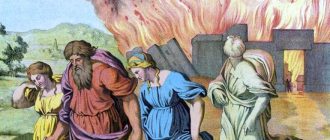
«You who allow friendship with young people, adoption and re-adoption, gatherings in cells, guilty of profiteering, you must be very wary of beardless young men and not let any of them into the monastery, even if the king’s son comes. For Sodom and Gomorrah perished for all this… Contempt for spiritual elders, admiration for men, feasts with young and beardless men, and touching body parts have become commonplace.»
This problem did not go away, so the early charter of the Holy Mountain of Athos (Tragos) of 1394 prescribed
«beardless children should not be accepted on the Mountain. And if anyone does not remove such a person from himself, let him be anathema.»
And here is Tragos’s decree of 1575:
«Beardless children shall not be allowed to live on the Mountain under any pretext, neither for the purpose of learning to read and write, nor for the purpose of instruction, nor for the sake of kinship. Any violator of this decree shall cease to perform sacred rites, and the monk shall be excommunicated and cursed, unworthy of forgiveness and not decayed after death.»
These official documents mention feasts with young novices, leading participants to embrace and touch each other’s genitals («touching the genitals»). The mention of the destruction of Sodom and Gomorrah helps us to complete this puzzle.
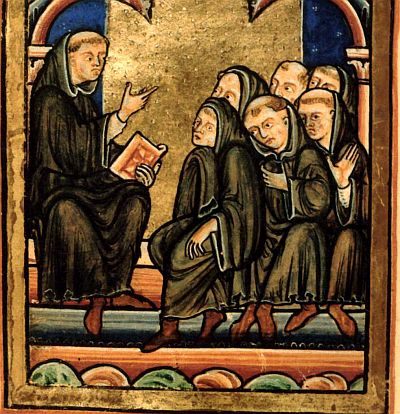
Description of the Athonite sexual scandals in the book «Posthumous Sayings of St. Nilus the Myrrh-Streamer»
These «utterances» are constructed as a posthumous prophetic denunciation of the monastic environment of Athos (St. Nilus died in 1651).
The ‘Posthumous Sayings’ are a pseudepigraphal work composed in the early 19th century, using the authority of Saint Nilus to critique the monastic environment of Mount Athos.
The central theme is the collapse of spiritual discipline, where external ascetic practices remain, but inner moral integrity fails.Themes of sexuality appear here not as separate episodes, but as part of a systematic criticism of the elders who have lost their fear of God. The sin of the elders is presented here as worse than worldly fornication, because it is committed in the name of God and spiritual fatherhood.
The «Posthumous Sayings» differ sharply from the Ancient Paterikon (4th century). The Paterikon mentions the individual struggle of monks with carnal temptations. It contains only hints and warnings, and the thoughts of monks are identified as the problem. The «Posthumous Sayings» describe a systemic crisis in monasticism and contain a direct denunciation of the practice of sodomy in monastic circles.
The author of the «Posthumous Sayings» does not attempt to relish the details of sex between two men, but presents them as a sign of total catastrophe:
«the elder becomes even more inflamed with carnal passion, intoxicated by this carnal love, and begins to embrace the novice; the novice, seeing that the elder is seducing him, begins to seduce his elder himself; thus carried away, both become intoxicated, falling into the act of copulation, rolling around like pigs with each other.»
The theme of sodomy in the book is closely linked to eschatology (the doctrine of the end of the world). Neil predicts that before the coming of the Antichrist, the world (including monasteries) will be flooded with «the stench of fornication.» The main sign of this fall will be precisely «unnatural sin» (sodomy):
“Alas, you most honourable fathers, a great invasion is coming upon you… Oh, alas, for sorrow upon sorrow is coming upon you!” (Chapter 58. God’s wrath is about to break out upon Athos, and what prevents it).
The monastic environment in this book is clearly divided into three groups:
1. «Elders» — persons with spiritual authority who have power over others.
2. «Beardless youths» («boys») — novice, young «novices.» The smooth face of a young man in a closed male society becomes a temptation.
«The young man caresses you, you adorn him with clothes, and he becomes like a maiden before you… When you look at such a maidenly face, what will happen to you then?»
The text warns that the arrival of beardless youths in monasteries (especially if there are many of them and they are not strictly controlled) is the beginning of the end for the monastic community.
3. The monastic system that covers up what is happening and suppresses complaints. Other monks know but remain silent; sin becomes a «secret known to all.»
Note that this is not about «same-sex love» or sex based on mutual attraction, but about abuse of power, manipulation, and hypocrisy.
The elders described covered up their carnal passion with spiritual guidance and justified physical intimacy with «love in Christ.» They chose young men for «obedience» based on physical attractiveness rather than spiritual maturity.
The elders sought the constant physical presence of the young men and demanded that they sleep in the same cell, «for supervision.»
The «»Posthumous Sayings» describe the psychological mechanism of moral decline. When a monk’s mind is clouded by greed and vanity, grace departs, and the person becomes defenceless against the most base passions. The elders, carried away by material things (accumulating wealth for the monastery, construction), begin to recruit young novices as a labour force, but ultimately fall into slavery to their own passions towards these young men.
There is a reversal of roles. Instead of the elder being a strict mentor and the novice a humble student, the opposite happens. The elders begin to «flatter» (curry favour with, please) the young novices. Young men become tyrants, manipulating elders through their attractiveness and the threat of leaving. The author uses a harsh comparison: elders who lose their novices mourn them just as «mothers mourn their kidnapped daughters.» This comparison unambiguously hints at an emotional and erotic attachment that has nothing to do with spiritual fatherhood.
«Often an elder indulges the disorder and disobedience of a novice. This comes from a fondness for the novice; then the novice becomes the elder, and the elder becomes the novice, finally submitting himself to his novice. Thus, the elders turned their whole life, i.e., their monastic life, upside down because of their fondness for their novices; i.e., in ancient times, novices were cherished by elders, obeying them completely, but now elders care for and cherish novices. If the novice is young, the elder is seduced by carnal temptation, gives complete power to his novice and submits to him completely. With this partiality towards the novice, a demon (of male lust) enters the elder, beginning to torment him to such an extent that the elder is finally overcome by his passion for the novice, making eyes at him; the novice, seeing how the elder makes eyes at him, makes eyes at the elder himself; the elder becomes even more inflamed with carnal passion, intoxicated by this carnal love, and begins to embrace the novice.
In the end, the enamoured elder is ready to leave the monastery, just so long as he does not have to part with his beloved young man:
A certain man had in his skete a beardless youth who was very handsome and greatly tempted the skete dwellers. There was also another man who was powerless to fight against that passion and who delighted in the youth in his thoughts.
Since the young man was a great temptation to the skete, some of the monks decided to remove him from the skete; others did not want this, for they were in love with the young man. The young man’s elder, in particular, preferred to leave the Mountain himself rather than part with the young man.»
The report of St. Ignatius (Bryanchaninov) on his inspection of the Valaam Monastery in 1838 fully confirms the author’s disappointing conclusion in «Posthumous Sayings» about the catastrophic state of monasticism:
«Although Hieromonk Irinarkh was acquitted after investigation, he can no longer remain in his position and in the monastery due to the accusations of such a vile vice. Hieromonk Irinarkh, accused of such vices, must also be stripped of his position and expelled from the monastery. The strict prohibition on hiring Finnish boys as workers at the Valaam Monastery must be reiterated.»
As a result, St. Ignatius expressed the following verdict on monasticism in the 19th century:
In our time, monasteries are in a terrible state, and many good people, having entered them without proper preparation, have become disillusioned and perished… Given the current state of minds, it is unclear how long monasteries will survive and how reliable they are as a refuge.
There is little hope for monasteries: they have rotted and destroyed themselves from within, and are still supported by the hand of God for the sake of a few well-meaning monks, as God promised to spare Sodom and Gomorrah if there were ten righteous people in them. A certain archimandrite, high-ranking in the diocese, said that he would certainly have left monasticism if it were not for the difficulties imposed by the regulations for those leaving it. Not everyone is so frank, but most think so, i.e., most abbots, mainly of the spiritual rank. Many monasteries have turned from havens of morality and piety into abysses of immorality and wickedness: even the strongest character cannot withstand this.
I recognise monasticism as a divine institution. But what can be done when people have transformed it into a caricature according to their carnal wisdom and want to replace true monasticism with acting in the eyes of men?…
In my opinion, everything in monasteries, even the most well-organised ones, is in decline.
Let us summarise
It is interesting to compare how attitudes towards sex among men in Byzantine asceticism changed in comparison with the position of St. Paul.
The Apostle Paul viewed men’s attraction to their own sex as a result of God’s judgment and as punishment from the Lord for idolatry (Romans 1:27). In the Christian community, St. Paul viewed same-sex relations only in the past tense:
«neither the sexually immoral nor men who have sex with men will inherit the kingdom of God. And that is what some of you were. But you were washed, you were sanctified, you were justified in the name of the Lord Jesus Christ and by the Spirit of our God» (1 Cor. 6:9-11).
Early monasticism was aware of the risk of same-sex acts, but spoke of it cautiously and in hints. Subsequently, sexual attractions began to afflict monks «repeatedly,» «frequently,» and «strongly.» It was enough for them to drink wine and go to bed with another monk under the same blanket.
I believe that Gnostic and Manichean ideas condemning family life and childbearing continued to be transmitted at a deep level in monastic circles for centuries. We remember that Gnostics practised queer forms of sexuality that excluded the conception of children. Isn’t this similar to the relationship between Russian bishops and their favourites?
The Byzantine tradition preferred to sterilise memory rather than address the problem. In monastic circles, the sin of sodomy became not an «accidental fall» but a conscious practice built into the role of spiritual mentor. An institutional mechanism of silence arose in Orthodox monasticism. An unspoken rule was formulated: «Sin is possible for individuals, but not for the system.» Therefore, criticism of the sins of the laity is permissible, criticism of the lustful passions of the outside world is permissible, but criticism of the institution of the church is not permissible.
The publication of The Posthumous Revelations of Nil the Myrrh-Gusher in 1912 was an explosion of internal criticism when silence became impossible. In this book, the author speaks not of the possibility of sin, but of the abuse of power, and this applies not to individual monks, but to the entire «eldership.»
In retelling, the idea of «Nil’s sayings» can be expressed as follows: «Where an elder seeks not the salvation of the soul, but physical comfort through power over the young, the monastery ceases to be a place of repentance and becomes a place of hidden debauchery.» At the same time, the external strictness of the charter only serves as a mask for internal decay.
Given the ongoing sexual scandals in Christian churches, the question arises: what exactly are the ‘traditional values’ that modern monasticism conveys to our youth?
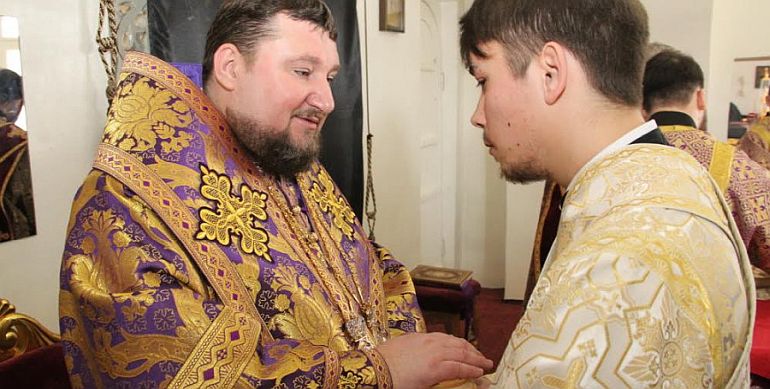
I wonder if today’s novices realise that the devil «often directs all his wiles towards ensuring that those who live a monastic life are tormented by unnatural passions«?
Is that what they want?