
Recently, one of the hierarchs of the Orthodox Church raised a number of questions about the attitude of Orthodox Christianity towards homosexual relationships.
He suggested reflecting on what the clergy is actually pushing those members of the Church with a homosexual orientation who seek to participate in the sacraments of Confession and Communion towards.
Persons of heterosexual orientation have the option of getting married, and so in a positive way they can fulfil their erotic desire with the Church’s blessing through the Godgiven sacrament of holy matrimony.
But homosexuals have no such option.
“A homosexual subject is called to lead a celibate life without feeling a vocation for it.”
Are we right to impose this heavy burden on the homosexual?
A second anomaly is to be found in the way homosexuals are commonly treated in the sacrament of confession. All of us recognize that there is an important distinction to be made between those homosexuals who engage in casual encounters, seeking out in some “gay” bar a partner for a single night; and on the other hand, those homosexuals who are committed to a permanent relationship, faithful and monogamous, in which deep love is involved.
Yet what frequently happens in confession? Let us suppose that the one who is promiscuous with genuine penitence resolves to pursue a life of purity in the future. In that case, he will probably be given absolution by the priest and will be permitted, perhaps with certain restrictions, to receive holy communion. For a time, he refrains from sexual activity, but then from frustration and loneliness he relapses into another casual encounter. After that he repents, and is absolved, and is once more blessed to receive communion. Then after a time he again lapses. So the cycle continues.
What happens, by contrast, to the faithful and monogamous homosexual? Perhaps the priest says in confession, “Are you willing to give up your homosexual relationship?” The penitent may answer, “I cannot do that.” The priest may rejoin, “You can continue to share a common life, marked by mutual affection; but will you abstain from further sexual activity?” The other may well reply, “I am not yet ready to undertake that.” The priest, faced with this refusal, may well feel that he cannot bless the penitent to receive the sacrament.
Now here certainly is a paradox.
The homosexual committed to a stable and loving relationship is treated more harshly than the homosexual who is casual and promiscuous, and who is seeking not true love but passing pleasure. Something has gone wrong here.
While still an Orthodox priest, I encountered a situation where another ‘shepherd’ excommunicated a young man from communion for a year because he was in a long-term homosexual relationship with his partner.
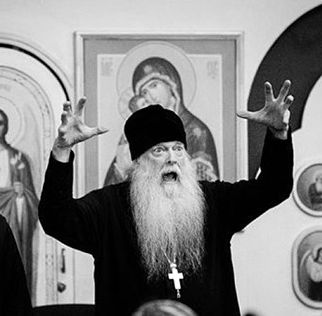
If we also take into account the public suspicion towards men living together, it becomes clear that a particular gay man may come to the conclusion that in these circumstances there is no point in looking for a stable relationship. Any priest will excommunicate him from communion, he may be fired from his job, and the saleswoman at the nearest shop will ironically ask if the familiar guy is his relative (this was the case in my apartment building in Russia).
The idea that a sexually mature person will simply exclude sex from their life is utopian and cruel.
As a result, the Church (Catholic and Orthodox) and homophobic society push gay people towards one-off sexual encounters. I would like to note that in some cases (depending on where they live or the nature of their relationships within a group), long-term relationships between two gay people are impossible. However, priests and secular homophobes emphasise that gay people have voluntarily rejected long-term relationships.
It is a vicious circle…
Aleksandr Usatov
ausatov@protonmail.com