Содержание
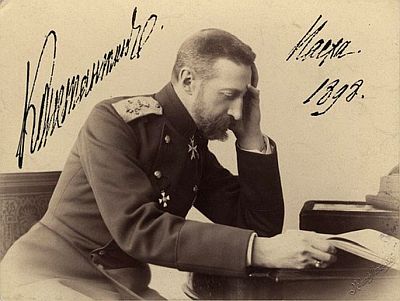
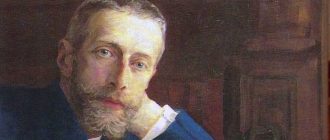
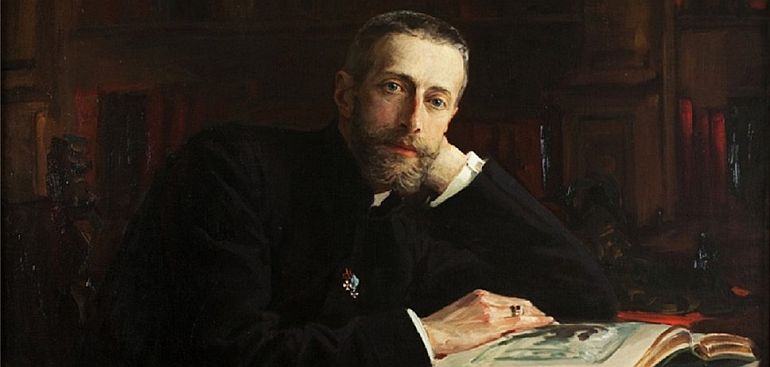
Grand Duke Konstantin Konstantinovich Romanov suffered from the conflict between his own sexuality and his notion of what an Orthodox Christian ought to be. His diaries allow us to watch how the moral judgement of a single act turned into a permanent condemnation of himself.
1876–1888. Youth and the Sovereign’s Company
The entries for 1876–1877 rest solely on Vostryshev’s popular retelling (no archival verification; paraphrase and shifted dates are possible), while those for 1886–1888 rest on Matonina’s 1998 edition, whose text should nevertheless be checked against the printed edition or against GARF.
16 June 1876. “I have a strange character: I adore beauty, but not womanly beauty at all — masculine beauty.”
7 July 1876. “Male beauty tempts me.” Disputed: popular retelling only.
8 July 1876. “Even the thought of love for a woman is tedious to me.”
3 September 1876. “To this day the thought of love for a woman is tedious and repugnant to me; I want strength, freedom, dashing valour, daring.”
11 October 1876. “I know that so far I am in no way morally corrupted… One thing is bad — my passion for making so-called ‘risqué’ double entendres. I shall certainly try to stop myself.”
8 November 1876, the frigate Svetlana. “…so as not to give my hands free rein and stroke him” (of the officer Menshikov). The name and its spelling appear only in Vostryshev.
26 December 1876, the frigate Svetlana. “…love for a man at eighteen is so unnatural.”
17 March 1877, New York. “Women surrounded me… One sat right down on me, laid her hands on my shoulders, my knee was between her legs — and I felt no lust or passion whatever.”
14 September 1886, Pavlovsk. “This Kalinushkin is a delightful man — I was not mistaken in him… I love him like one of my own, and he has become very attached to my firstborn.”
3 August 1888, the village of Rozhdestvo on the Warsaw road, in a tent (written 4 August). “All through the camp season I never managed to have a long talk with my favourite Ryabinin, and for the first time, here, in the evening on the march, I fell into a long conversation with him.”
9 August 1888, Pavlovsk (written 13 August, retrospectively). “It was especially sad to say farewell to Vasiliev (rank abbreviated in the original), to Ermakov, to the tailor Prokofy Stepanov… Having given each my portrait in a frame and a gold piece, and having made the sign of the cross over each and kissed him three times, I drove off to Pavlovsk behind a troika.”
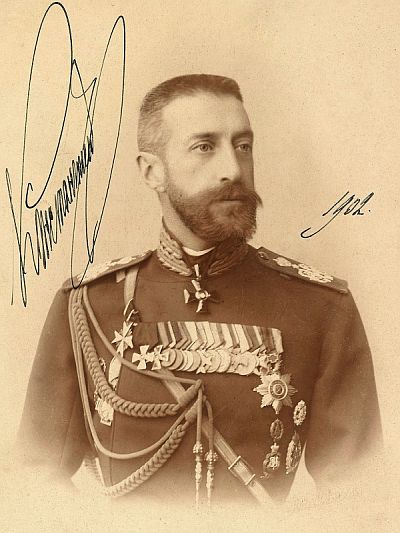
1894–1905. The turning point, abstinence, relapses and blackmail
March 1894, the regimental cathedral (from the context, the Preobrazhensky Regiment). “These last two months I have fought temptation more strenuously, have dropped my bargains with conscience, and have tried not to give myself occasion to sin. And that occasion for me was the bathhouse: if you do not go to the baths, you do not sin, or I sin only in thought. And then, at the Liturgy in the regimental cathedral, I saw my bath attendant. Catching sight of him, I quickly turned my eyes aside and looked at him no more.” Disputed: no day of the month; popular editions only.
19 November 1903, St Petersburg. “[They call me] ‘the best man in Russia’. But I know what this ‘best man’ really is. How astonished all those people who love and respect me would be if they knew of my depravity! I am deeply dissatisfied with myself.”
24 November 1903. “Again I feel a surge of strength and am ready to fight my passions. It is always so after a fall; but this time I feel more resolve than, say, ten years ago, on this very day, that is, 22 November.”
15 December 1903, St Petersburg. “I have been rereading my diaries for the past ten and twenty years. I am dissatisfied with myself. Ten years ago I set out on the right path, began to fight my chief sin in earnest, and did not sin for seven years — or rather, I sinned only in thought. In 1900, immediately after my appointment as head of the military schools, in the summer at Strelna, I strayed from the path. Then for two years things were better, but in 1902, after my illness, I sinned a great deal during a trip along the Volga. Finally, in this year, 1903, I have strayed altogether and have lived in constant struggle with my conscience… The trouble is that I could fight, yet cannot; I grow weak, forget the fear of God, and fall… Again I very nearly fell, but this time I held back. But for how long? Help me, O Lord! The Lord does help, but I myself reject His help.”
21 December 1903. “Evil thoughts keep coming into my head; they plague me especially in church. It is shameful to admit, but it is true. It has never been as bad as in these last six months.”
28 December 1903, St Petersburg. “My life flows happily, I am truly ‘fortune’s darling’… but… the main thing is missing: peace of soul. My secret vice has wholly taken possession of me. There was a time, and a fairly long one, when I had almost conquered it, from the end of 1893 to 1900. But since then, and especially since April of this year (just before the birth of our charming Georgy), I slipped again and began to roll, and to this day I roll as if down an inclined plane, lower and lower… I am no longer young, I am married, I have seven children… But I am a perfect weathercock: at times I make a firm resolve, pray fervently, stand through a whole Liturgy in ardent prayer, and then immediately, at the appearance of a sinful thought, everything is forgotten at once… Am I really to stay bogged down in sin?”
14 February 1904. “I reflect in torment: I sin, I grow worse and worse, I tremble at God’s punishment, and instead I enjoy nothing but God’s mercies. My sin is known to no one; I am loved, praised and extolled beyond my deserts… I have a wonderful wife… delightful children; and now I receive a special mark of the sovereign’s favour — a rescript acknowledging my services — a girls’ gymnasium is to be named after me. How can I not mend my ways?” Disputed: absent from the 1998 newspaper publication; a reprint.
19 April 1904, St Petersburg. “My soul is again unwell; sinful thoughts, memories and desires pursue me again. I dream of going to the baths on the Moika or of having the bath heated at home; I picture the attendants I know — Alexey Frolov and especially Sergey Syroezhkin. My desires have always been directed towards simple peasants; outside that circle I have neither sought nor found partners in sin. When passion speaks, the arguments of conscience, virtue and prudence fall silent.”
15 May 1904, Petersburg, by the private bath rooms. “My way lay past the baths. I thought that if I saw an attendant at the outer door of the rooms I would not hold out and would go in… The door to the rooms turned out to be ajar, but no attendants were to be seen. By some miracle I held back and drove past. One would think this victory over myself ought to gladden me, but no; on the contrary, for a long time afterwards I was vexed with myself for not having taken the convenient opportunity, for not going in.”
18 May 1904, Petersburg, Morskaya — the Police Bridge — the Moika. “During a meeting sinful thoughts overcame me. On Morskaya, short of the corner of Nevsky, I dismissed the coachman and set off on foot to the Police Bridge, and crossing it turned left along the Moika. Twice I walked past the doors of the private baths, back and forth; the third time I went in. And so I am again guilty of the same. My moral state is exceedingly bad…”
17 June 1904, the bath at home. “In the morning I washed in the bath at home. So, once again I did not sustain the struggle.” Disputed: not found in any verified edition.
23 June 1904, Petersburg, the bath at home. “Again I gave up the struggle with my lust — not that I could not, but I did not want to fight. In the evening our bath was heated for me; the attendant Sergey Syroezhkin was busy and brought his brother, a twenty-year-old lad named Kondraty, who works as an attendant at the Usachev Baths. And this lad I led into sin. Perhaps for the first time I made him sin, and only when it was too late did I remember the terrible words: woe to him who leads one of these little ones into sin.”
26 July 1904, St Petersburg. “In the morning, the bath. And again, like a squirrel in a wheel, I found myself in the same place.” Disputed: a reprint, outside the newspaper set.
12 September 1904, St Petersburg. “I sent for Yatsko, and he came to me this morning. I easily drew him into frankness. It was strange to hear features so familiar to me: he has never felt attraction to a woman and has more than once fallen in love with men. I did not confess to him that I know these feelings from my own experience… Before saying goodbye he kissed my face and hands; I ought not to have allowed him this, but I felt sorry for him, for which I afterwards tormented myself with shame and vague remorse. He told me that ever since we first met at the Vilna Junker School, rapturous feelings towards me had awakened in his soul, ever growing stronger. How this reminds me of my own young years.”
15 September 1904, Strelna. “I walked along the road by which Sub-Lieutenant Yatsko was to come in the carriage sent for him… I confess I was glad to see him and at the same time rather afraid of this new meeting. Now that I know his inclinations, similar to my own, there was something to fear. Last time I held back, but who can answer for the future… I heard from him the names of men I had vaguely suspected of unnatural inclinations; with some of them Yatsko had sinned, but now, it seems, he has firmly resolved to give it all up. God help him.”
28 December 1904. “Evil thoughts pursued me all day. In the evening I wanted to go to the bath, the one on the Moika, but for some reason did not go. It is nearly eleven now. Why did I not go? I fear sin, I fear being at odds with my conscience, and yet I want to sin. This struggle is agonising.”
30 December 1904. “Another day spoiled by evil thoughts. This is something physiological, not merely dissoluteness and lack of will. There are days when, if thoughts come creeping in, you easily drive them away; and then there are days when they flood in — and you cannot manage them at all. One must not give in, must endure it, and then it will grow easier again. There, one more day I held back; but I do not feel like praying.”
31 December 1904. “Evil thoughts troubled me much less today. Conscience and reason tell me that I must once and for all cut off my line of retreat, that is, not go to the bath, neither my own nor the private ones. But will and feeling rebel. I want to see Sergey Syroezhkin, who need not even be led into temptation, since he is the first to be ready for it. And so the struggle. Lord, help me. Shall I rid myself of the vice, shall I overcome myself, or will it overcome me? What will the new year bring us? Blessed be the Name of the Lord from henceforth and for evermore.” Disputed: some reprints date this 31 December 1903.
28 February 1905, St Petersburg. “And so for six months I have not sinned as before, that is, with another; true, I sinned by myself three times.”
12 March 1905, Petersburg, the historical portrait exhibition. “In the afternoon I took Tatyana to the historical exhibition of portraits from the time of Peter I to our own day. Nikolay Mikhailovich conceived it, and it has come off splendidly. Diaghilev showed us round. It is unpleasant for me to meet him, though he does not suspect it; unpleasant because I know something about him from Yatsko.” The gloss “[known for homosexual inclinations]” in circulating versions is the publisher’s insertion, not the diary text. Disputed: the year is established from the context of the exhibition; a reprint.
22 December 1905. “I was greatly disturbed by a letter from Captain Sosnitsky, who had embezzled up to three thousand of the junkers’ tea-room money and, having failed to make good the deficit, was dismissed from the service. Justifying himself, he writes that sin happens to anyone; ‘to you, for instance’, he goes on, and mentions that one evening in the summer of 1903 I came to his duty post in the camp of the Pavlovsk School and from there went to the Krasnoye Selo baths. ‘What happened there you surely remember’, Sosnitsky writes. The next day, after coming off duty, he visited the bathhouse and heard from the attendant who had served me that I had had something with him and that I had given him twenty roubles for it… What Sosnitsky alleges is in this instance untrue: I remember that evening well — I was indeed at the baths, but I gave the attendant no twenty roubles, and there was nothing to give them for. But it is untrue only with respect to the case cited. What is frightening is that there were other cases, and that they are becoming known. I did not receive Sosnitsky yesterday and will not receive him; I shall take no measures. Come what may. Do I not deserve punishment?”
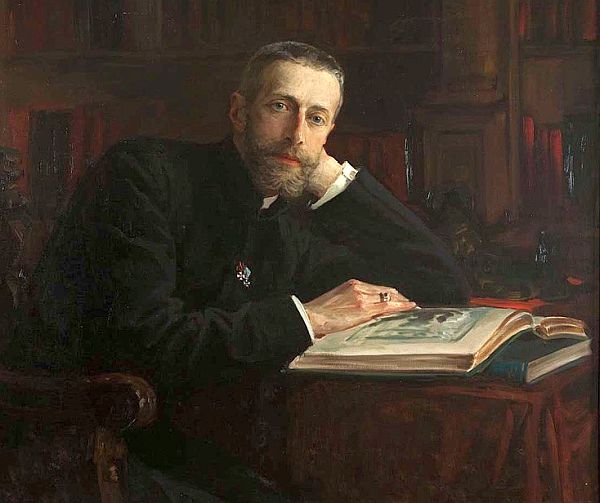
1909
26 March 1909, Petersburg — Pavlovsk (written on Good Friday). “A blessed state of spirit. Since my confession in the first week of the fast I have remained at peace with my conscience to this day.”
14 June 1909, Pavlovsk (written 16 June). “I too want to have a talk, and I began: I must bring my conscience back into balance, for it has begun to waver since my return from Siberia. From the beginning of February to the beginning of June evil thoughts did not trouble me, but in the last two weeks they have begun creeping into my head again. One must not be a slave to mood, but must oneself create one in which the conscience is clean. The best means is to prepare for communion: then, before the majesty of the sacrament, sinful thoughts fall silent.”
7/20 July 1909, Wildungen (written 8/21 July). “Again not at peace with my conscience.”
23 July / 5 August 1909, Wildungen (written 24 July / 6 August). “Having made peace with my conscience, which reproached me for the fall of 17 January this year, when in the bathhouse I again yielded to my wretched unnatural passion, and having twice completed the pre-communion fast during Great Lent, I was for quite a long time entirely free of evil thoughts, those harbingers of sin. So it went until June, when, returning from Siberia to Pavlovsk, I again failed to drive away sinful thoughts. Before leaving for Poltava I prepared for communion, so as to find balance again. But now, having arrived here, on one of the first nights, in sleeplessness, when tempting visions troubled me, I gave myself up to the secret sin, and since then it has gone on and on. I no longer fight the thoughts, but faint-heartedly dream of going to the baths on my return to Petersburg and satisfying my shameful passion… All these days I read neither prayers nor the Gospel, morning or evening. I am aware that I am rolling down an inclined plane…”
25 July / 7 August 1909, Liebenstein, Hôtel Bellevue (written the same 25th). “I am deeply dissatisfied with myself, but I feel neither the strength nor the desire to overcome tempting thoughts, and think of nothing but how, as soon as I reach Petersburg, I shall give free rein to my unnatural passion while washing in the bathhouse.”
2 August 1909, Volokolamsk — Ostashevo, in the carriage. “Here a turning point took place in me. From my first days in Wildungen until now, that is, for almost a month, I had yielded to my baser powers, voluntarily given myself up to evil thoughts, and had already planned how, on the way to Petersburg, I would sin in Moscow and then at the Marble Palace… Whether someone prayed for me, or my guardian angel or one of the saints interceded, or God’s mercy touched me, but suddenly I felt ashamed of myself; the thought of resisting temptation, a thought that had seemed impossible to me, took hold of me and made me resolve to abandon my evil intentions and force myself to fight.”
15 August 1909, Ostashevo (written 18 August). “We bathe every day. And again I am not at peace with my conscience. Yet nature here is so lovely, life so carefree, quiet, without fatigue. If only I could enjoy it and thank God. And I…”
16 August 1909, Ostashevo. “Having won a victory over myself on arriving here, I went to Petersburg and came back to the country, and on the very next day after my birthday I fell again into the secret sin.”
18 August 1909, Ostashevo (block marked “Ostashevo, 20 Aug.”). “I am deeply upset by my own moral dissoluteness. Amid outward piety, amid the seeming blamelessness of family life, amid verses that display the most elevated and pure views and aspirations, I, like a veritable ‘whited sepulchre’, give myself up to base vices unseen by anyone. In the ten days I have been living here at Ostashevo, how many times have I been guilty both of the secret sin and of another, worse one, while bathing, taking advantage of the fact that the local young people bathe with us; of course, when bathing together there is general horseplay, and one can touch a naked body without the other noticing anything inadmissible in the touch. There were two feast days, two vigils and two Liturgies at which I was present, and this did not stop me from falling into sin while bathing.” Disputed: the dating 18/20 August; the ages of those involved are not given in the text.
19 August 1909, Ostashevo. “After writing the sonnet ‘To Night’, which speaks of purity and of eternity, I sinned again, as though two men lived in me at once… And if only I suffered from weakness of will; no, I know that I can conquer myself when I want to, and have conquered myself many times. This is simply unpardonable dissoluteness.”
30 August 1909, Ostashevo — Volokolamsk, on the train. “Sinful thoughts overcame me again — thoughts I not merely failed to drive away but, on the contrary, summoned up.”
31 August 1909, Petersburg (written 2 September). “I ordered the bath. I am waiting for the attendant Sergey Syroezhkin… I have sinned again. Not as a justification, of course, but as a certain mitigating circumstance I may adduce that the sin was mutual, without coercion.”
25 September 1909, Pavlovsk (written 26 September). “True, this concerns the outer, so to speak animal life; inwardly, spiritually, I am dissatisfied, being again at odds with my conscience, so that I do not consider it permissible to pray to God or read the Gospel. In my thoughts and imagination there is the visit to the bathhouse, that is, giving myself up to sin. And again passion enfeebles reason, which faint-heartedly yields to it, despite the arguments well known to me that these concessions enslave ever more strongly.”
26 September 1909, Pavlovsk (written on the morning of 27 September). “I did not go to the vigil: they serve in the large church, and the doctor advises me to walk less. I am glad of the pretext, since my present sinful mood does not push me towards church but repels me from it. And were it not for this pretext, I would have gone and suffered from hypocrisy.”
29 September 1909, Pavlovsk (written on the morning of 30 September). “My conscience is undergoing an agonising wait: the doctor has allowed me to wash in the bathhouse at the end of the week; the bath is ordered for Friday evening, and the attendant Kondraty has been invited — Sergey Syroezhkin’s own brother, young and slender, who served as a corporal in the 198th Alexander Nevsky Reserve Regiment. My thoughts are directed to this alone.”
1 October 1909, Pavlovsk (written on the morning of 2 October). “Under the pretext of protecting my legs, still healing after erysipelas, I attended neither the vigil nor the Liturgy. The true reason was an unclean conscience; my thoughts are not directed towards the divine; it is impossible to serve God and mammon.”
2 October 1909, Petersburg, the bathhouse (written at Pavlovsk on the morning of 4 October). “After the theatre my long vicious expectations and desires received satisfaction in the bathhouse.”
12 October 1909, Petersburg, the Marble Palace. “At the Marble Palace I received a petition brought by the bath attendant, reserve corporal Kondraty Syroezhkin; like his brother Sergey, he is asking to be taken onto the court staff. I sent his petition and his regimental certificate with a note to General Anichkov, head of the court marshal’s department.”
14 October 1909, Pavlovsk (written 16 October). “In the afternoon I walked the streets of the town: along Soldatskaya, over the Linnovsky Bridge, along Mariinskaya and Ekaterininskaya, where I went to look over the commercial baths, which were not heated. I was driven there by evil thoughts that had seized my defiled imagination, drawing insistent tempting images before me. As recently as the 2nd they had led me into sin, and I already could not wait for two weeks to pass so that I would have a pretext to order the bath at the Marble Palace again with Kondraty. I am fully aware that I am perishing, that the unnatural inclination is sucking me in ever more strongly; I await God’s punishment and cannot break free of the sin.”
11 November 1909, Pavlovsk — Petersburg (written 13 November). “After supper I read to my wife and Tatyana, and at about ten I drove into town, to the bathhouse… Again…”
31 December 1909, Ostashevo (written in the evening of the last day of the year). “My life is turning out extraordinarily happily; I am indeed ‘fortune’s darling’, and I am deeply aware how unworthy I am of this happiness and well-being. — At times I expect that any moment now, for my monstrous sins, from which I do not even try to free myself, heavenly thunder will crash down, the Lord’s punishment will come… And yet I go on sinning and feel that I no longer have the strength to conquer sin.”
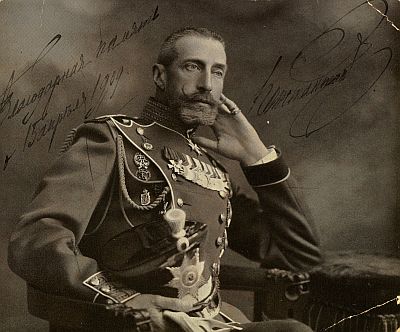
1910–1911
25 December 1910, Pavlovsk. “I walked in Pavlovsk. The frost, which had intensified on the 22nd, has eased. — Tea with the children… The vigil. In the large church the lighting is very poor, only candles, and in the half-darkness it is cosy. But I am again not at peace with my conscience.”
4 January 1911, Petersburg, the Marble Palace. “I was with Kostya at a comrades’ dinner with the Izmailovsky officers. There was the bath — reserve corporal Kondraty Syroezhkin. — I read papers and spent the night at the Marble Palace.”
2 July 1911, Pavlovsk. “Sinful thoughts overcome me again. In church, at the vigil, I gave myself up to them instead of praying.”
3 July 1911, the Marble Palace (written 4 July). “I am in the highest degree dissatisfied with myself: I gave free rein to imagination, it draws tempting pictures before me, and I did not stand firm: I sinned alone and, rolling down the inclined plane, today ordered the bath and sent for an attendant, one of the three Syroezhkin brothers.”
4 July 1911, the Marble Palace (written 5 July). “Bath. Kondraty Syroezhkin.”
5 July 1911, the Marble Palace (written 6 July). “Again pangs of conscience and the awareness of shameful powerlessness in the struggle with my own perversion.”
8 July 1911, Petersburg, the Tarasov Baths on 1st Rota Street (written 9 July). “Another fall. I was in a private room of the Tarasov Baths on 1st Rota, unrecognised. A young attendant, Denis Petrov, of Smolensk Province.”
10 July 1911, the Marble Palace (written 12 July). “Neither my mother’s death nor my son’s engagement overcame my vile inclinations. The sweetness of sin so possesses me that I resolved to send for a new acquaintance, the attendant Denis. The bath was finished at home on the morning of the 13th, and sinful fancies do not leave me.”
11 July 1911, Petersburg — Strelna. “We stood through the Liturgy and a moleben at the monastery. I feel agonised, especially in church, aware of all my falsehood and hypocrisy.”
13 July 1911, the Marble Palace (written 14 July). “At the price of shame and repentance I bought relief — temporary, of course, and for a short term only.”
20 July 1911, Strelna (written 21 July). “I went into town, to the bathhouse. Sergey Syroezhkin. Both shame and pangs; again I came to my senses. But for how long?”
29 July 1911, Strelna, the mole and the bathing houses (written 30 July). “Walking by the landing stage — more precisely, at the end of the mole, the continuation of Pristanskaya Street, where in old days there was a landing stage and now there are bathing houses and the yacht club premises — I kept meeting a very young civilian sailor, hired by one of the summer residents, who keeps sailing and rowing boats. The sailor’s name is Egor Petrov Morozov; he is only in his twentieth year and goes about in nothing but a striped sailor’s jersey. He keeps urging me to go out sailing on the sea.”
30 July 1911, Strelna — the Marble Palace (written 31 July). “I went sailing on the sea in a small tender belonging to the house-owner Kravchenko, alone with the young civilian sailor Egor Morozov. It is shameful and disgusting to recall that outing… We attended the vigil in the upper church of the memorial church. In the evening, the bath — Denis Petrov.”
2 August 1911, Moscow, the Sanduny Baths (written at Ostashevo, 4 August). “In Moscow Robert, Bagra and I dined in the garden of the Hermitage restaurant. I was at the Sanduny Baths. The attendant was Nikolay Semenov, a nineteen-year-old from Ryazan.”
1 November 1911, Petersburg — Pavlovsk. “I had a meeting on the statute of the Military Order. — Bath; Sergey Syroezhkin.”
12 November 1911, Petersburg (the entry continued at Altenburg, 15/28 November). “Bath — Kondraty [Syroezhkin].” The surname in square brackets is an insertion by the editor of the edition.
P.S.
The biography of Grand Duke Konstantin Konstantinovich in the Orthodox Encyclopedia (2019) is a telling example.
Yu. A. Kuzmin describes his religiosity, his monastic aspirations, his pilgrimages and his charity in detail, yet passes over in complete silence the diary evidence of the Grand Duke’s erotic attraction to men and of his sexual contacts with them. The author of the encyclopedia article had Konstantin Romanov’s diaries before his eyes, but made a deliberate and severe editorial selection.
The result is that the reader is offered a selective image of an Orthodox grand duke from which an essential part of his personal history has been removed.
Sources
All works listed are in Russian.
- Bokhanov, A. N. “The Secret Sin of K.R.” Rodina, 2000, no. 4, pp. 61–65.
- Vostryshev, M. I. The Fate of the Crowned Brothers: The Diaries of Grand Duke Konstantin Konstantinovich (a popular edition).
- GARF (State Archive of the Russian Federation), fond 660, inventory 1, files 3–65 — the diaries of Grand Duke Konstantin Konstantinovich.
- “The Diary of K.R. for 1909,” published by T. A. Lobashkova. Moskva, 2015, nos. 6, 7, 8, 9, 10, 11.
- The Diary of Grand Duke Konstantin Konstantinovich (K.R.), 1911–1915, edited and compiled, with an introductory essay, by V. M. Khrustalev. Moscow: PROZAiK, 2013. 624 pp.
- “The Riddle of K.R.”: From the Diaries of Grand Duke Konstantin Konstantinovich, published with an introductory essay and notes by E. Matonina. Moskva, 1994, no. 1, pp. 134–183; no. 2, pp. 137–175; no. 6, pp. 130–137.
- The Forbidden Passions of the Grand Dukes.
- “From the Diary of Konstantin Romanov,” foreword by N. Lapin. Krasnyi arkhiv (Red Archive), 1930, vols. 43 (6), 44 (1), 45 (2).
- K.R.: Diaries, Memoirs, Poems, Letters, introductory essay and commentary by E. Matonina. Moscow: Iskusstvo, 1998. 492 pp.
- Klein, L. S. The Other Side of the Luminary: The Unusual Loves of Remarkable People. The Russian Constellation. St Petersburg: Folio-Press, 2002.
- Konstantin Romanov. “Diaries of 1903–1905.” Moskovsky Komsomolets, 6 December 1998 (with an introductory note by S. Mironenko).
- Metropolitan Mitrofan (Badanin). The Sin of Sodom. St Petersburg–Murmansk: Ladan, 2019. 40 pp.
- “Prozhito” — a corpus of personal diaries, diary no. 182 (Konstantin Romanov).
- Sak, K. V. Grand Duke Konstantin Konstantinovich in the Socio-Political Life of the Russian Empire. Candidate of Historical Sciences dissertation, 2013.
- “Am I Really to Stay Bogged Down in Sin?” (a reprint of diary entries).
- Sokolinsky, Lev. “The Illustrious Gays of the Empire: The Military.”